




The economic growth centers in Pakistan are located along the Indus River, these include the diversified economies of Karachi and major urban centers in Punjab (such as Faisalabad, Lahore, Sialkot, Rawalpindi, and Gujranwala), alongside less developed areas in other parts of the country.
In recent decades, regional connectivity initiatives such as the China-Pakistan Economic Corridor (CPEC) have emerged as pivotal contributors to infrastructure and energy development, with long-term implications for economic stability.
Pakistan was classified as a semi-industrial economy for the first time in the late 1990s, albeit an underdeveloped country with a heavy dependence on agriculture, particularly the textile industry relying on cotton production.Primary export commodities include textiles, leather goods, sports equipment, chemicals, and carpets/rugs.
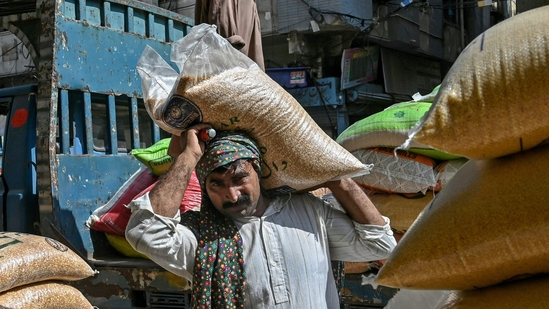
In its early years, Pakistan’s economy relied heavily on private industries. The nationalization of a significant portion of the sector, including financial services, manufacturing, and transportation, began in the early 1970s under Zulfikar Ali Bhutto. During Zia-ul Haq’s regime in the 1980s, an “Islamic” economy was adopted, outlawing economic practices forbidden in Sharīʿah and mandating traditional religious practices. The economy started privatizing again in the 1990s.
Agriculture
The majority of the population, directly or indirectly, is dependent on this sector, contributing about 23.0% of the gross domestic product (GDP) and accounting for 37.4% of the employed labor force in 2021. It is the largest source of foreign exchange earnings. The most important crops are wheat, sugarcane, cotton, and rice, accounting for more than 75% of the value of total crop output. Pakistan’s largest food crop is wheat. In 2017, Pakistan produced 26,674,000 tonnes of wheat, almost equal to all of Africa (27.1 million tonnes) and more than all of South America (25.9 million tonnes), according to the FAOSTAT. In the market year of 2018/19, Pakistan exported a record 4.5 million tonnes of rice.
Pakistan is a net food exporter, except in occasional years when its harvest is adversely affected by droughts. Pakistan exports rice, cotton, fish, fruits (especially Oranges and Mangoes), and vegetables and imports vegetable oil, wheat, pulses, and consumer foods. The economic importance of agriculture has declined since independence when its share of GDP was around 53%.