




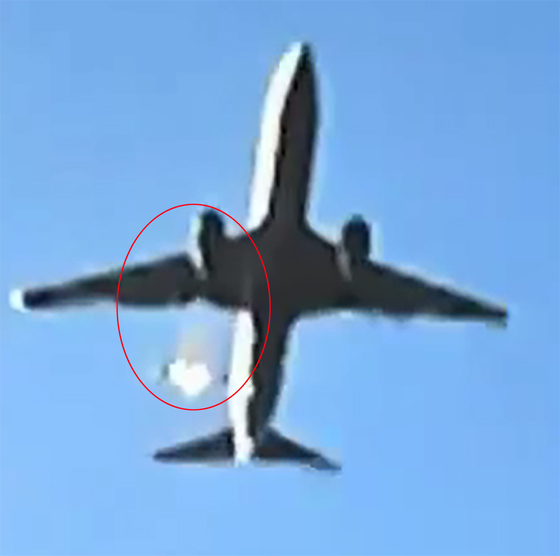
Preliminary results of the investigation into the devastating Jeju Air crash in December in South Korea showed that both engines of the plane were damaged after being hit by birds, but its pilots had switched off the less damaged engine just before the crash landing.
The findings, which indicated human error, sparked fierce protests from grieving families and fellow pilots who accused authorities of shifting the responsibility for the accident to the dead pilots.
South Korea’s Aviation and Railway Accident Investigation Board had initially planned to make public the results of its investigation into the plane’s engines on Saturday. But the board was forced to cancel its press conference due to strong opposition from relatives of the crash victims who were informed of the findings earlier in the day, according to government officials and grieving families.
“If they want to say their investigation was conducted in a credible and independent manner, they should have presented evidence supporting their explanation,” said Kim Yu-jin, head of an association of grieving families. “None of us are angry with the pilots.”
The Boeing 737-800 plane operated by Jeju Air landed on its belly without its landing gear deployed at South Korea’s southern Muan International Airport on Dec. 29. It overran a runway, hit a concrete structure and burst into flames. It was the deadliest accident in South Korea’s aviation history in decades, killing all but two of the 181 people on board.
Investigation indicates pilots shut down wrong engine
A multilateral investigation team led by South Korea said it found no fault with the plane’s engines, manufactured by France’s Safran and GE, according to a copy of an unpublished briefing report obtained by The Associated Press.
A thorough examination of the engines found the plane’s right engine had suffered more serious internal damage after the bird hit as it was engulfed in huge flames and black smoke, the report said. But the pilots had shut down the plane’s left engine, the report said, citing investigations into the cockpit voice recorder, flight data recorder and the engines’ checks.
Officials previously said the Boeing jetliner’s black boxes stopped recording about four minutes before the crash, complicating the investigation into the cause of the crash. The cockpit voice recorder and flight data recorder cited in the briefing report refer to data stored before recordings stopped.
The report did not explain why the pilots shut down the less damaged engine and did not say whether it was the pilots’ fault.
Grieving families and fellow pilots criticize investigation
Grieving families and pilots from Jeju Air and other airlines criticized the investigation’s findings, saying authorities should disclose the cockpit voice recorder and flight data recorder.
“We, the 6,500 pilots of civilian airlines, are unable to hold back our anger against the absurd logic of the Aviation and Railway Accident Investigation Board losing neutrality,” the Korean Pilots Unions Alliance said in a statement on Tuesday.
Jeju Air’s unionized pilots also issued a statement urging authorities to present scientific evidence to prove that the plane should have landed, which would normally have been the case if it took off with a less damaged engine.
The latest report focuses only on the engine problems and does not mention other factors that could be blamed for the crash. These include the concrete structure the plane collided with. It housed a set of antennas called a localizer designed to guide planes safely during landing, and many analysts say it should have been made of a more easily broken material. Some pilots say they suspect the government would not want to blame the localizer or bird strikes primarily for the mass deaths because Muan Airport is directly under the Ministry of Transport.
The Aviation and Railway Accident Investigation Board and the Ministry of Transport have not publicly responded to the criticism. They said they would also not publicly discuss the engine investigation to respect the demands of grieving families.
A person familiar with the investigation told the AP that officials are looking into the localizer and other issues, such as whether air traffic controllers informed pilots quickly enough about the threat of bird strikes and what emergency training Jeju Air gave pilots. The person, who requested anonymity citing the sensitive nature of the investigation, said officials had previously planned to make the results of the investigation public after reviewing various issues, but plans were changed at the request of grieving families and tried to release the results of the engine investigation. He said officials did not want to place responsibility for the accident on the pilots.
Officials aim to publish final results of the investigation by next June, the person said.
Kwon Bo Hun, dean of the College of Aeronautics at South Korea’s Far Eastern University, said the engine investigation report was not published.